The New Programming Language Is Clarity
“Software engineers are dead.”
I hear it more and more now. Sometimes as a joke. Sometimes with real excitement.
“AI writes the code now. Why do we still need developers?”
Every time, something inside me pushes back.
I’m an architect by title. But I’m a developer at heart. I still remember the feeling when my code finally ran after hours of failing. That small “it works” moment is why many of us chose this life.
So yes, it hurts a little when people say we are no longer needed.
But I don’t think they are right. And I don’t think they are completely wrong either. Let me explain.
Code was always just a tool
This week I watched a TEDx talk by Rainer Stropek. He described the exact feeling I had. Then he said one simple thing that stayed with me: he is not just a coder, he is a developer.
That is me too.
Think about it. Programming languages were always abstractions. They freed us from machine code, memory addresses and registers. I never loved those. I loved building things.
AI is the next layer. A very powerful one. But still a tool.
With AI, I don’t need to worry so much about syntax or remembering every pattern. I can focus on the problem, the design and the result.
The tool changed. The craft didn’t.
This is not only about developers
Here is the part many people miss. AI is not a developer problem. It is everyone’s challenge.
With a Claude Code subscription and a few skills from GitHub, I can now make motion-graphic videos myself. If I want my own voice, I use ElevenLabs voice cloning. And yes, my cloned voice speaks without my grammar mistakes :)
So what happens to video editors?
Look at cinema. Nitesh Tiwari’s Ramayana uses DNEG’s Brahma AI to match the actors’ lip movements to the English dialogue (Gulf News). The director says real dubbing artists still voiced the film, and AI only did the lip-sync (Outlook India). But the question is already in the room: what about dubbing artists and editors next?
In hospitals, AI now helps doctors read scans in radiology, pathology and dermatology.
Designers, writers, translators, lawyers. Everyone is asking the same question we are: “What is left for me?”
Developers simply felt it first.
Why great engineers still matter
AI is very good at routine code. I use it every day and I enjoy it.
But AI gets you to “almost right.” The gap between almost right and actually right is where systems crash, data leaks, and a payment goes to the wrong account.
Closing that gap needs things an algorithm does not bring:
- Judgment: knowing when the AI is wrong, even when it sounds confident.
- Accountability: a real person who owns the system when it breaks.
- Context: the business rules, the users and the history that are not in the prompt.
- Translation: turning a vague business problem into a clear technical goal.
AI did not remove this job. It made it more important.
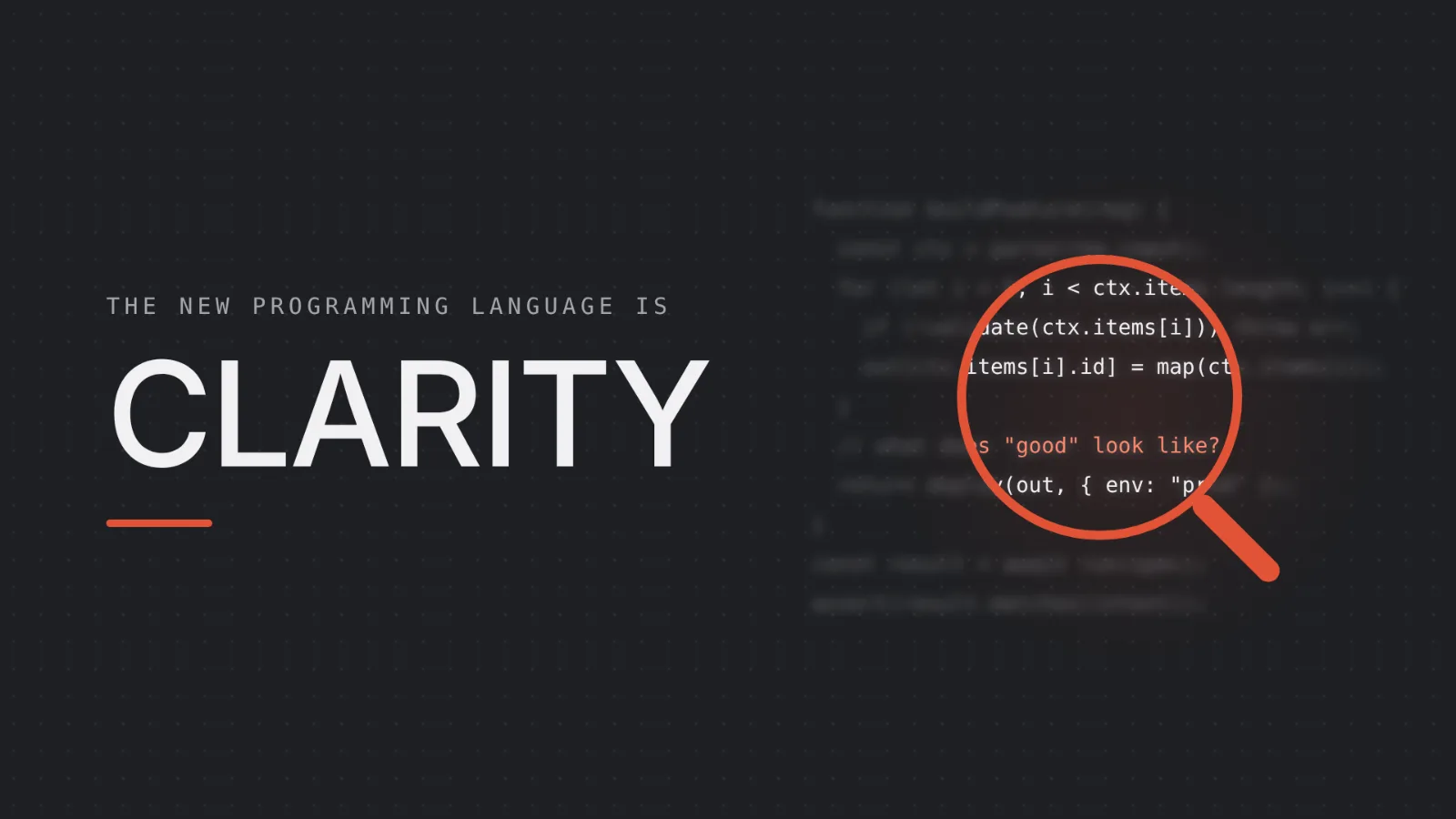
The new programming language is clarity
For years, programming meant translating an idea into syntax. Syntax is no longer the bottleneck. Clarity is.
With AI, plain language becomes the programming interface. So the basic questions change:
- Can you describe what you want?
- Can you give good examples?
- Can you set clear limits?
- Can you explain what “good” looks like?
- Can you test that the result matches what you meant?
Communication becomes a technical skill. Examples matter. Shared understanding matters.
Programming in 2026 is not “Can you write Python, Java or React?” It is “Can you explain what you want so clearly that AI builds the right thing?”
Turning a fuzzy idea into a precise specification. That is the superpower every software engineer should hold now.
This is also why so many AI projects stall between pilot and production. The model is rarely the problem. Unclear goals, unclear owners and unclear tests are. I wrote about that in Why I’m focusing on taking AI from pilot to production.
Three things leaders can do this month
- Ask before you cut. Before you reduce an engineering team because of AI, ask one question: when the AI is wrong, who will notice?
- Train for clarity, not just tools. Teach everyone who uses AI to write a clear request, give an example and define what “done” looks like.
- Keep a human check before go-live. Make sure a skilled engineer reviews and tests AI-written code before it touches real users or real data.
For engineers
- Move from “coder” to “developer.” Spend less energy on syntax and more on design, trade-offs and review.
- Practise writing short specs: the goal, the limits, two examples and the test that proves it works.
- Get very good at reading and testing code you did not write. That is where your value now sits.
So, are software engineers dead?
No. But the centre of our work has moved.
Less typing, more thinking. Less syntax, more judgment.
To every developer feeling a little lost right now: you are not finished. Your role is moving up a level.
To every leader planning to “replace engineers with AI,” ask one question first: when the AI is wrong, who in your team will know?
I still love writing code. I always will. But code is not my identity anymore. Building is. And the language I build with now is clarity.
If you are a leader trying to get AI from pilot to production, clearly and safely, work with me.
Sources
- Rainer Stropek, What to teach when AI writes the code, TEDxLinz.
- Gulf News, Ranbir Kapoor’s Ramayana English stuns fans with AI-like dubs, August 2026.
- Outlook India, Ramayana: Nitesh Tiwari clarifies AI is used only for lip-sync, not dubbing, 28 October 2026.